
Alzheimer’s Disease: what is it?
What is Alzheimer’s Disease?
Alzheimer’s disease is more than just forgetfulness—it is a progressive brain disorder that slowly erodes memory, thinking skills, and the ability to perform even the simplest daily tasks. Named after Dr. Alois Alzheimer, who first described the condition in 1906, this disease affects millions of people worldwide, making it the most common cause of dementia. Alzheimer’s is a serious medical condition that changes how the brain functions, ultimately altering a person’s personality, behavior, and independence.
For families and individuals facing Alzheimer’s, the journey can be challenging. The disease doesn’t just affect memory; it can disrupt communication, decision-making, and even basic physical abilities over time. Early detection and understanding of the disease are crucial, as they allow for better management, planning, and access to support resources.
Globally, Alzheimer’s is a growing concern. As lifespans lengthen, more individuals are living with the condition. According to the World Health Organization (WHO), around 55 million people worldwide have dementia, with Alzheimer’s accounting for 60–70% of cases. This number is expected to rise as populations age, making awareness and education more important than ever.
In the following sections, we’ll explore what happens in the brain during Alzheimer’s, how to recognize its signs, and what can be done to manage the condition. Most importantly, we’ll discuss how research is advancing, offering hope for better treatments and, one day, a cure.
Characteristics of Alzheimer’s Disease
How Alzheimer’s Affects the Brain
The brain is an intricate structure containing billions of nerve cells that relay information to one another using both electrical impulses and chemical messengers. In Alzheimer’s, two abnormal structures disrupt this communication:
- Amyloid Plaques: These are clumps of a protein called beta-amyloid that build up between neurons. They interfere with cell-to-cell communication and trigger inflammation, damaging brain tissue.
- Tau Tangles: Inside neurons, a protein called tau helps maintain the cell’s structure. In Alzheimer’s, tau becomes twisted into abnormal tangles, blocking the transport of nutrients and other essential molecules within the cell. This leads to cell death.
As neurons die, the brain shrinks (atrophies), particularly in areas responsible for memory, such as the hippocampus. Over time, this damage spreads to other regions, affecting language, reasoning, and even basic bodily functions.
Alzheimer’s vs. Normal Aging
It’s natural to experience some changes in memory and thinking as we age. You might occasionally forget names, misplace your keys, or take longer to recall information.
But Alzheimer’s is not a normal aging.
Here’s how it differs:
| Normal Aging | Alzheimer’s Disease |
|---|---|
| Sometimes forgetting names or appointments, only to recall them afterward. | Frequently forgetting recent conversations, events, or important dates, and not recalling them even with reminders. |
| Occasionally making mistakes while handling finances or household chores. | Struggling to follow familiar recipes, manage bills, or use household appliances. |
| Sometimes needing help with complex tasks, like setting up a new phone. | Difficulty completing basic tasks, such as dressing appropriately or using a microwave. |
| Feeling temporarily confused about the day of the week. | Losing track of time, getting lost in familiar places, or forgetting how you got somewhere. |
| Developing specific preferences for how things are done. | Exhibiting poor judgment, such as falling for scams or neglecting personal hygiene. |
Who Is Affected by Alzheimer’s?
Alzheimer’s primarily affects older adults, with most cases diagnosed in people aged 65 and older. However, it can also occur in younger individuals—a condition known as early-onset Alzheimer’s, which accounts for about 5–10% of cases.
- Age: The risk of Alzheimer’s increases with age. After 65, the likelihood of developing the disease doubles every five years.
- Genetics: Having a close family member with Alzheimer’s slightly increases your risk. Rare genetic mutations can cause early-onset Alzheimer’s, which often appears in a person’s 40s or 50s.
- Gender: Women are more likely to develop Alzheimer’s than men, partly because they tend to live longer.
- Lifestyle and Health: Poor cardiovascular health, diabetes, obesity, smoking, and lack of mental or physical activity can also increase risk.
Why Is It Important To Diagnose Alzheimer’s Early?
Alzheimer’s begins years before symptoms appear. During this time, subtle changes occur in the brain, but the person may still function normally. Detecting the disease early—through cognitive tests, brain imaging, or biomarker analysis—allows for:
- Better planning: Patients and families can make informed decisions about care, finances, and legal matters.
- Access to treatments: While there is no cure, medications and therapies can help manage symptoms and slow progression.
- Lifestyle changes: Adopting a brain-healthy diet, exercise routine, and social engagement may improve quality of life.
- Clinical trials: Early diagnosis may qualify patients for experimental treatments that could advance research.
A Condition That Touches Everyone
Alzheimer’s doesn’t just affect the person diagnosed—it impacts families and caregivers. Watching a loved one struggle with memory loss and personality changes can be heartbreaking, while the demands of caregiving can be overwhelming. However, understanding the disease, seeking support, and staying informed can make the journey easier for everyone involved.
Causes and Risk Factors of Alzheimer’s Disease
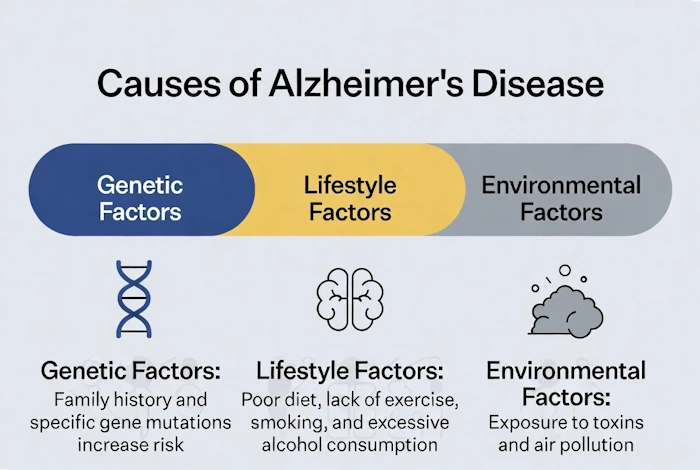
Causes of Alzheimer’s disease. Images: re-cognition.center
Biological Causes: What Happens in the Brain?
Alzheimer’s is characterized by abnormal changes in the brain that disrupt communication between neurons (nerve cells) and lead to their death. Two hallmark features are central to this process:
-
Amyloid Plaques
- Beta-amyloid is a protein fragment that naturally occurs in the brain. In Alzheimer’s, these fragments clump together to form plaques between neurons.
- Plaques interfere with cell-to-cell communication and trigger an inflammatory response, damaging surrounding brain tissue.
- Research suggests that the buildup of amyloid begins years before symptoms appear, making it a key target for early detection and treatment.
-
Tau Tangles
- Tau proteins assist in maintaining the internal framework of neurons. In Alzheimer’s, tau becomes abnormally twisted, forming tangles inside cells.
- These tangles block the transport of nutrients and other essential molecules, leading to cell death.
- The spread of tau tangles through the brain correlates with the progression of cognitive decline.
-
Neuronal Loss and Brain Atrophy
- As neurons die, the brain shrinks (atrophies), particularly in areas critical for memory, such as the hippocampus.
- This loss of brain volume disrupts cognitive functions, including memory, reasoning, and language.
Genetic Factors
Genetics play a significant role in Alzheimer’s, though having a family history does not guarantee you will develop the disease. Two main genetic influences are:
-
APOE-e4 Gene
- The apolipoprotein E (APOE) gene has three forms: e2, e3, and e4.
- Inheriting the APOE-e4 variant increases the risk of developing Alzheimer’s, though not everyone with this gene will get the disease.
- People with one copy of APOE-e4 have a 2–3 times higher risk, while those with two copies have a 12 times higher risk.
-
Familial Alzheimer’s Disease (FAD)
- In rare cases (less than 1% of all Alzheimer’s), the disease is caused by mutations in specific genes (APP, PSEN1, or PSEN2).
- These mutations lead to early-onset Alzheimer’s, which can appear as early as a person’s 30s or 40s.
- If a parent carries one of these mutations, their child has a 50% chance of inheriting it.
Lifestyle and Environmental Risk Factors
While some risk factors for Alzheimer’s cannot be changed, others are modifiable—meaning you can take steps to reduce your risk.
| Non-Modifiable Risk Factors | Modifiable Risk Factors |
|---|---|
| Age: Risk increases after age 65. | Cardiovascular Health: High blood pressure, high cholesterol, and heart disease can damage blood vessels in the brain. |
| Family history: Risk rises if a parent or sibling has Alzheimer’s. | Diabetes: Poorly controlled diabetes is linked to a higher risk of cognitive decline. |
| Genetics: Carrying the APOE-e4 gene or rare genetic mutations. | Head Injuries: Severe or repeated traumatic brain injuries (TBIs) may increase risk. |
| Smoking: It harms blood vessels and diminishes oxygen delivery to the brain. | |
| Obesity and Sedentary Lifestyle: Lack of physical activity is associated with cognitive decline. | |
| Poor Diet: Diets high in saturated fats and sugars may contribute to brain inflammation. | |
| Chronic Stress and Sleep Disorders: Poor sleep and long-term stress can negatively impact brain health. | |
| Social Isolation: Lack of social engagement is linked to faster cognitive decline. |
Modifiable vs. Non-Modifiable Risk Factors: What Can You Do?
While you can’t change your age or genetic makeup, you can influence many lifestyle factors to support brain health:
- Protect Your Heart: Manage blood pressure, cholesterol, and diabetes.
- Stay Physically Active: Regular exercise increases blood flow to the brain and supports the growth of new neurons.
- Eat a Brain-Healthy Diet: The Mediterranean diet—rich in fruits, vegetables, whole grains, and healthy fats—is linked to a lower risk of Alzheimer’s.
- Challenge Your Mind: Engage in mentally stimulating activities, such as reading, puzzles, or learning new skills.
- Prioritize Sleep: Aim for 7–9 hours of quality sleep per night to allow the brain to clear amyloid plaques.
- Avoid Smoking and Limit Alcohol: Both can damage brain cells and increase the risk of cognitive decline.
- Stay Socially Connected: Maintain relationships and participate in community activities to reduce isolation.
Stages of Alzheimer’s Disease
Alzheimer’s disease progresses gradually, affecting each person differently. However, most individuals experience a predictable pattern of decline, divided into four main stages: preclinical, mild (early-stage), moderate (middle-stage), and severe (late-stage). Understanding these stages helps patients, families, and caregivers prepare for the challenges ahead and seek appropriate support.
Preclinical Stage: Silent Brain Changes
- What Happens: Alzheimer’s begins years or even decades before symptoms appear. During this stage, abnormal amyloid plaques and tau tangles start forming in the brain, particularly in areas linked to memory.
- Detection: These changes can only be detected through brain imaging (PET scans), cerebrospinal fluid tests, or blood biomarkers—tools primarily used in research or specialized clinics.
- Symptoms: None are noticeable to the person or their loved ones. The individual functions normally in daily life.
- Why It Matters: Identifying Alzheimer’s at this stage is a major focus of research. Early detection could allow for preventive treatments before irreversible damage occurs.
Mild (Early-Stage) Alzheimer’s: The First Signs
- Duration: Typically lasts 2–4 years.
- What Happens: Neuronal damage spreads, leading to mild but noticeable cognitive decline. The hippocampus (memory center) is often affected early.
- Common Symptoms:
- Memory lapses: Forgetting recent conversations, names, or where objects were placed.
- Difficulty with problem-solving: Struggling with tasks like managing finances, following recipes, or planning events.
- Mild confusion: Getting lost in familiar places or losing track of time.
- Personality changes: Increased anxiety, irritability, or withdrawal from social activities.
- Language issues: Trouble finding the right words or repeating questions.
- Daily Life: The person can still live independently but may need reminders or assistance with complex tasks.
- Caregiver Role: Family members often notice these changes first. Encouraging a medical evaluation is crucial to rule out other causes (e.g., vitamin deficiencies, thyroid issues) and start early interventions.
Moderate (Middle-Stage) Alzheimer’s: Growing Challenges
- Duration: Often the longest stage, lasting 2–10 years.
- What Happens: Damage spreads to areas controlling language, reasoning, and sensory processing.
Common Symptoms:
-
- Increased memory loss: Forgetting personal history, such as one’s address or phone number.
- Difficulty with daily tasks: Struggling to dress appropriately, bathe, or use household appliances.
- Behavioral changes: Mood swings, agitation, aggression, or wandering. Sundowning (increased confusion in the evening) is common.
- Language decline: Difficulty speaking, reading, or writing. Repeating stories or questions frequently.
- Hallucinations or delusions: Believing false ideas (e.g., thinking a caregiver is stealing) or seeing things that aren’t there.
- Poor judgment: Falling for scams, neglecting hygiene, or making unsafe decisions.
- Daily Life: The person can no longer live alone safely. Supervision and structured routines become essential.
- Caregiver Role: This stage is often the most demanding for families. Caregivers may need to assist with personal care, manage medications, and address behavioral challenges.
Severe (Late-Stage) Alzheimer’s: Dependency and Decline
- Duration: Typically 1–3 years, though some individuals live longer with intensive care.
- What Happens: The brain undergoes widespread atrophy, affecting nearly all functions. The person loses the ability to communicate, recognize loved ones, and control movement.
- Common Symptoms:
- Loss of communication: Limited to single words or phrases, or becoming completely nonverbal.
- Physical decline: Difficulty walking, sitting, or swallowing. Increased risk of infections (e.g., pneumonia) and falls.
- Total dependency: Requires 24/7 care for all activities, including eating, toileting, and mobility.
- Loss of awareness: May no longer recognize family members or their surroundings.
- Increased vulnerability: High risk of complications like bedsores, malnutrition, and infections.
- Daily Life: The focus shifts to comfort, dignity, and palliative care. Hospice or specialized memory care units often become necessary.
- Caregiver Role: Caregivers face emotional and physical exhaustion. Support from healthcare professionals, counselors, and hospice teams is vital. Decisions about end-of-life care, such as advance directives, should be addressed early in the disease process.
Symptoms of Alzheimer’s Disease
Alzheimer’s disease affects each person differently, but its symptoms follow a predictable pattern as the condition progresses. These symptoms can be grouped into three main categories: cognitive, behavioral and psychological, and physical. Recognizing these signs early can lead to timely medical evaluation, better management, and improved quality of life for both the individual and their caregivers.
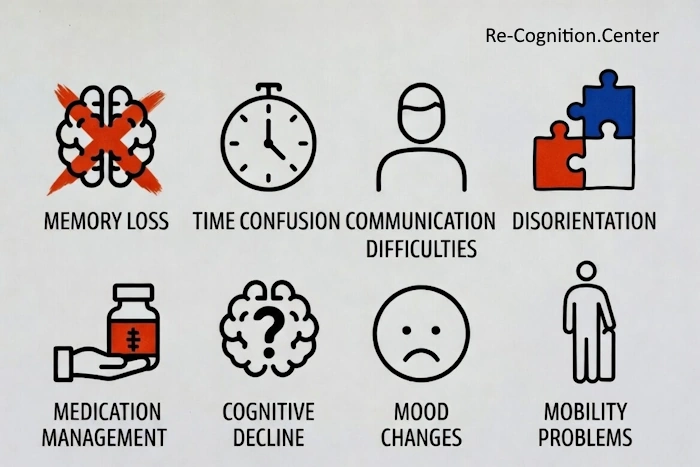
Symptoms of Alzheimer’s disease. Image: re-cognition.center
Cognitive Symptoms: Changes in Memory and Thinking
Cognitive symptoms are often the first noticeable signs of Alzheimer’s. They result from the damage and death of neurons in brain regions responsible for memory, reasoning, and language.
-
Memory Loss
- Early-stage: Forgetting recently learned information, such as names, appointments, or conversations. Repeating questions or relying heavily on memory aids (e.g., notes, reminders).
- Middle-stage: Difficulty recalling personal history, such as one’s address, phone number, or significant life events.
- Late-stage: Severe memory loss, including forgetting the names of close family members or one’s own identity.
-
Disorientation
- Time and place: Losing track of dates, seasons, or the passage of time. Getting lost in familiar places, such as the neighborhood or even at home.
- People: Struggling to recognize faces, including those of friends, family, or even one’s own reflection.
-
Difficulty with Problem-Solving and Planning
- Struggling with tasks that require concentration and organization, such as:
- Managing finances or paying bills.
- Following a recipe or instructions.
- Planning and executing multi-step activities (e.g., grocery shopping, cooking).
- Difficulty making decisions, such as what to wear or what to eat.
- Struggling with tasks that require concentration and organization, such as:
-
Language Problems
- Finding words: Pausing frequently in conversations, substituting incorrect words, or struggling to name common objects.
- Understanding speech: Difficulty following conversations or written instructions.
- Writing: Challenges with spelling, grammar, or forming coherent sentences.
-
Decline in Judgment and Reasoning
- Poor decision-making, such as:
- Falling for scams or telemarketing schemes.
- Neglecting personal hygiene or safety (e.g., leaving the stove on).
- Dressing inappropriately for the weather.
- Poor decision-making, such as:
Behavioral and Psychological Symptoms: Emotional and Personality Changes
Alzheimer’s doesn’t just affect cognition—it also impacts mood, behavior, and personality. These symptoms can be particularly challenging for caregivers and may require medical or therapeutic intervention.
-
Mood Swings
- Rapid shifts between irritability, anger, sadness, or apathy without obvious triggers.
- Increased sensitivity to stress or frustration, leading to emotional outbursts.
-
Depression and Anxiety
- Depression: Persistent sadness, loss of interest in hobbies, social withdrawal, or changes in sleep and appetite.
- Anxiety: Restlessness, excessive worrying, or fearfulness, especially in unfamiliar situations.
-
Agitation and Aggression
- Agitation: Pacing, fidgeting, or verbal outbursts, often due to confusion, frustration, or discomfort.
- Aggression: Physical or verbal hostility, which may occur if the person feels threatened or overwhelmed.
-
Hallucinations and Delusions
- Hallucinations: Seeing, hearing, or sensing things that aren’t there (e.g., believing there are intruders in the house).
- Delusions: False beliefs that are resistant to reasoning, such as:
- Accusing caregivers or family members of stealing.
- Believing a spouse is having an affair.
- Insisting on going “home” even when already at home.
-
Sundowning
- Increased confusion, agitation, or restlessness in the late afternoon or evening. This phenomenon is linked to disruptions in the brain’s internal clock.
-
Apathy and Social Withdrawal
- Loss of motivation to engage in activities, conversations, or social interactions.
- Reduced interest in hobbies, work, or relationships.
-
Wandering
- Walking aimlessly, often due to disorientation, restlessness, or a desire to “go home.” Wandering can be dangerous, as it increases the risk of getting lost or injured.
Physical Symptoms: Changes in Motor Skills and Health
In the later stages of Alzheimer’s, physical symptoms become more pronounced as the disease affects areas of the brain responsible for movement and bodily functions.
-
Loss of Motor Skills
- Difficulty with coordination: Struggling with tasks like buttoning a shirt, using utensils, or walking steadily.
- Muscle stiffness or weakness: Leading to a shuffling gait, falls, or difficulty standing up.
- Loss of fine motor control: Trouble writing, drawing, or picking up small objects.
-
Swallowing Difficulties (Dysphagia)
- Choking, coughing, or gagging while eating or drinking.
- Increased risk of aspiration pneumonia (a lung infection caused by inhaling food or liquid).
-
Weight Loss and Malnutrition
- Forgetting to eat or losing interest in food.
- Difficulty chewing or swallowing, leading to inadequate nutrition.
-
Incontinence
- Loss of bladder or bowel control due to the brain’s inability to regulate these functions.
-
Increased Susceptibility to Infections
- Weakened immune system and reduced mobility increase the risk of:
- Pneumonia.
- Urinary tract infections (UTIs).
- Bedsores (pressure ulcers) from prolonged sitting or lying down.
- Weakened immune system and reduced mobility increase the risk of:
-
Seizures
- Some individuals with Alzheimer’s experience seizures, particularly in the later stages, due to abnormal electrical activity in the brain.
When to Seek Medical Attention
If you or a loved one experience any of the following, consult a healthcare provider for an evaluation:
- Memory loss that disrupts daily life.
- Difficulty completing familiar tasks.
- Confusion about time, place, or people.
- Changes in mood, personality, or behavior.
- Trouble with language, judgment, or problem-solving.
Diagnosis of Alzheimer’s Disease
Diagnosing Alzheimer’s disease involves a comprehensive evaluation that combines medical history, cognitive testing, brain imaging, and laboratory tests. While there is no single test for Alzheimer’s, doctors use a multistep approach to assess symptoms, rule out other conditions, and confirm the diagnosis with high accuracy.
1. Medical History and Physical Examination
The diagnostic process begins with a detailed conversation between the patient, their family, and a healthcare provider. This step helps identify symptoms, risk factors, and potential alternative causes of cognitive decline.
-
Patient and Family Interview:
- Discussion of symptoms: When they began, how they’ve progressed, and how they affect daily life.
- Review of medical history, including chronic conditions (e.g., diabetes, heart disease), past head injuries, and medications.
- Assessment of family history of Alzheimer’s or other dementias.
- Evaluation of lifestyle factors, such as diet, exercise, and alcohol or tobacco use.
-
Physical Examination:
- A thorough physical exam to check for conditions that might mimic dementia, such as:
- Thyroid disorders.
- Vitamin deficiencies (e.g., B12, folate).
- Infections or metabolic imbalances.
- Neurological assessment to evaluate:
- Reflexes.
- Muscle strength and coordination.
- Balance and gait.
- Sensory function.
- A thorough physical exam to check for conditions that might mimic dementia, such as:
2. Cognitive and Neuropsychological Tests
Cognitive tests are non-invasive tools used to assess memory, thinking, language, and problem-solving skills. These tests help doctors determine the severity of impairment and distinguish Alzheimer’s from other types of cognitive decline.
-
Mini-Mental State Examination (MMSE):
- A 10–15 minute test that evaluates:
- Orientation to time and place.
- Short-term memory.
- Attention and calculation.
- Language and visuospatial skills.
- Scores span from 0 to 30, where a lower result reflects a greater level of impairment.
- A 10–15 minute test that evaluates:
-
Montreal Cognitive Assessment (MoCA):
- A slightly more sensitive test than the MMSE, often used to detect mild cognitive impairment (MCI).
- Assesses:
- Memory.
- Executive function (planning, organizing).
- Visuospatial abilities.
- Language and abstraction.
- Scores range from 0 to 30, with scores below 26 suggesting possible cognitive impairment.
-
Other Neuropsychological Tests:
- Clock Drawing Test: Evaluates visuospatial and executive function by asking the patient to draw a clock showing a specific time.
- Verbal Fluency Tests: Measures language and executive function by asking the patient to name as many words as possible in a category (e.g., animals) within a set time.
- Trail Making Test: Assesses attention, processing speed, and cognitive flexibility.
3. Brain Imaging: Visualizing the Brain’s Structure and Function
Brain imaging helps doctors detect physical changes in the brain associated with Alzheimer’s, such as shrinkage (atrophy), amyloid plaques, or reduced blood flow. These tests also help rule out other conditions, such as tumors, strokes, or vascular dementia.
-
Magnetic Resonance Imaging (MRI):
- Utilizes magnetic fields and radio waves to produce high-resolution images of the brain’s architecture.
- Helps identify:
- Hippocampal atrophy (shrinkage of the memory center).
- Cortical thinning (loss of brain tissue in the outer layer).
- Signs of vascular damage (e.g., small strokes).
-
Computed Tomography (CT) Scan:
- Employs X-rays to generate slice-by-slice images of the brain.
- Less detailed than MRI but useful for detecting:
- Brain tumors.
- Bleeding or blood vessel abnormalities.
- Structural changes due to strokes.
-
Positron Emission Tomography (PET) Scan:
- Measures brain activity and protein deposits using a radioactive tracer.
- Amyloid PET scans detect amyloid plaques, a hallmark of Alzheimer’s.
- FDG-PET scans show areas of reduced glucose metabolism, which can indicate neuronal damage.
- Tau PET scans (emerging technology) visualize tau tangles in the brain.
4. Biomarkers: Diagnosing Alzheimer’s at the Molecular Level
Biomarkers are biological indicators that can detect Alzheimer’s-related changes in the brain, even before symptoms appear. These tests are increasingly used in research and clinical settings to improve diagnostic accuracy.
-
Cerebrospinal Fluid (CSF) Analysis:
- A lumbar puncture (spinal tap) is performed to collect CSF, which surrounds the brain and spinal cord.
- Measures levels of:
- Amyloid-beta: Low levels suggest amyloid plaques in the brain.
- Tau and phosphorylated tau (p-tau): High levels indicate neuronal damage and tau tangles.
- Highly accurate for diagnosing Alzheimer’s, though invasive.
-
Blood Tests:
- Plasma amyloid-beta and tau: New blood tests can detect Alzheimer’s-related proteins with high accuracy, offering a less invasive alternative to CSF analysis.
- Phosphorylated tau 217 (p-tau217): A promising biomarker that may predict Alzheimer’s years before symptoms appear.
5. Differential Diagnosis: Ruling Out Other Conditions
Alzheimer’s shares symptoms with other types of dementia and medical conditions. A thorough evaluation helps ensure the correct diagnosis and appropriate treatment.
-
Other Types of Dementia:
- Vascular Dementia: Results from diminished blood flow to the brain, frequently triggered by strokes. Symptoms may appear suddenly and progress in a step-like pattern.
- Lewy Body Dementia (LBD): Characterized by fluctuating cognition, visual hallucinations, and Parkinson’s-like movement issues.
- Frontotemporal Dementia (FTD): Affects personality, behavior, and language more than memory.
- Mixed Dementia: A combination of Alzheimer’s and vascular dementia.
-
Reversible Conditions That Mimic Dementia:
- Thyroid disorders (hypothyroidism).
- Vitamin B12 or folate deficiency.
- Depression or anxiety (pseudodementia).
- Infections (e.g., urinary tract infections, syphilis).
- Medication side effects (e.g., sedatives, anticholinergics).
- Alcohol or substance misuse.
-
Neurological Disorders:
- Parkinson’s disease.
- Normal pressure hydrocephalus (excess fluid in the brain).
- Creutzfeldt-Jakob disease (a rare, rapidly progressing prion disease).
Putting It All Together: The Diagnostic Process
- Initial Evaluation: Medical history, physical exam, and cognitive tests.
- Laboratory Tests: Blood and urine tests to rule out reversible causes.
- Brain Imaging: MRI or CT scan to assess brain structure and rule out other conditions.
- Biomarker Testing (if available): CSF analysis or PET scans for confirmation.
- Specialist Referral: A neurologist, geriatrician, or neuropsychologist may be consulted for complex cases.
- Diagnosis and Next Steps: If Alzheimer’s is confirmed, the healthcare team will discuss treatment options, clinical trials, and support resources.
Treatment and Management of Alzheimer’s Disease
While there is no cure for Alzheimer’s disease, a combination of medications and supportive care can help manage symptoms, slow progression, and improve quality of life for both patients and caregivers. Treatment focuses on preserving cognitive function, managing behavioral symptoms, and providing comprehensive support to enhance well-being at every stage of the disease.
1. Medications: Slowing Symptoms and Targeting Disease Progression
Medications for Alzheimer’s aim to improve cognitive function, manage behavioral symptoms, and—more recently—target the underlying disease process. These drugs are most effective when started early.
A. Cholinesterase Inhibitors
How they work: These drugs increase levels of acetylcholine, a chemical messenger involved in memory and learning, by preventing its breakdown in the brain.
Commonly prescribed medications:
- Donepezil (Aricept): Approved for all stages of Alzheimer’s. Taken once daily, it may help with memory, attention, and language.
- Rivastigmine (Exelon): Available as a patch or oral medication. Used for mild to moderate Alzheimer’s and Parkinson’s disease dementia.
- Galantamine (Razadyne): Boosts acetylcholine and may also stimulate nicotinic receptors, offering additional benefits for cognition.
Benefits:
- May temporarily improve or stabilize memory, thinking, and daily functioning.
- Can help manage behavioral symptoms like apathy and agitation.
Side effects:
- Nausea, vomiting, diarrhea, or loss of appetite.
- Dizziness or headaches.
- In rare cases, may cause bradycardia (slow heart rate) or fainting.
Who should take them?
- Primarily prescribed for mild to moderate Alzheimer’s, though donepezil is also approved for severe stages.
B. NMDA Receptor Antagonists
How they work: Memantine (Namenda) regulates glutamate, a chemical involved in learning and memory. It helps protect brain cells from excessive glutamate, which can cause damage.
Benefits:
- Used for moderate to severe Alzheimer’s, often in combination with cholinesterase inhibitors.
- May slow cognitive decline and improve daily functioning.
Side effects:
- Dizziness, confusion, or headaches.
- Constipation or increased blood pressure.
Who should take it?
- Typically prescribed for moderate to severe Alzheimer’s, either alone or with donepezil.
C. Upcoming Therapies: Targeting Amyloid and Tau
Recent advancements focus on disease-modifying therapies that target the underlying causes of Alzheimer’s: amyloid plaques and tau tangles.
- Aducanumab (Aduhelm)
- How it works: A monoclonal antibody that binds to amyloid plaques, helping the immune system clear them from the brain.
- Approved for: Early-stage Alzheimer’s (mild cognitive impairment or mild dementia).
- Controversy: Its approval was debated due to mixed clinical trial results, but it remains an option for some patients.
- Side effects: Amyloid-related imaging abnormalities (ARIA), which can cause brain swelling or bleeding.
- Lecanemab (Leqembi)
- How it works: Another anti-amyloid antibody that showed modest but meaningful slowing of cognitive decline in clinical trials.
- Approved for: Early Alzheimer’s.
- Side effects: Similar to aducanumab, including ARIA. Requires regular MRI monitoring.
- Future Therapies in Development
- Anti-tau drugs: Aim to prevent the spread of tau tangles.
- Inflammation-targeting treatments: Focus on reducing brain inflammation, which contributes to neuronal damage.
- Gene therapy and stem cell research: Exploring ways to repair or replace damaged brain cells.
Note: These treatments are not cures, but they represent a shift toward slowing disease progression rather than just managing symptoms.
2. Non-Pharmacological Treatment and Supportive Care
Medications are just one part of Alzheimer’s management. Lifestyle changes, cognitive therapies, and social support play a crucial role in maintaining function and quality of life.
A. Cognitive Stimulation Therapy
What it is: Structured activities designed to engage memory, problem-solving, and language skills.
Examples:
- Reminiscence therapy: Using photos, music, or objects to recall past experiences.
- Puzzle and memory games: Crosswords, card games, or digital brain-training apps.
- Art and music therapy: Creative activities that stimulate the brain and reduce agitation.
Benefits:
- Slows cognitive decline.
- Improves mood and reduces anxiety.
- Enhances social interaction.
Do not forget about hydration: Dehydration can exacerbate confusion, so ensure adequate fluid intake.
External Sources about Alzheimer’s Disease
-
Alzheimer’s Association
- Website: alz.org
- Resources: 24/7 helpline, local support groups, educational webinars, and research updates.
- Helpline: 1-800-272-3900 (available 24/7)
-
National Institute on Aging (NIA)
- Website: nia.nih.gov/alzheimers
- Resources: Government-funded research, care tips, and clinical trial information.
-
Alzheimer’s Foundation of America (AFA)
- Website: alzfdn.org
- Resources: Virtual support groups, educational materials, and a toll-free helpline.
- Helpline: 1-866-232-8484 (available 7 days a week)
-
World Health Organization (WHO) – Dementia
- Website: who.int/news-room/fact-sheets/detail/dementia
- Resources: Global statistics, public health initiatives, and policy recommendations.
-
Family Caregiver Alliance
- Website: caregiver.org
- Resources: Caregiver support, legal and financial planning, and state-specific service
Helplines and Support Services
- Alzheimer’s Association Helpline: 1-800-272-3900 (24/7 support, multilingual services)
- Alzheimer’s Foundation of America Helpline: 1-866-232-8484 (7 days a week)
- Eldercare Locator (U.S.): 1-800-677-1116 (connects families to local resources)
- Crisis Text Line: Text HOME to 741741 (24/7 mental health support for caregivers)
- National Suicide Prevention Lifeline: 1-800-273-TALK (8255) (for caregivers experiencing severe stress or depression)
Clinical Trials and Research Participation
- Alzheimer’s Association TrialMatch: alz.org/trialmatch
- Connects individuals with clinical trials in their area.
- ClinicalTrials.gov: clinicaltrials.gov
- A database of global clinical trials for Alzheimer’s and other conditions.
Sources & References
- Alzheimer’s Association. (2024) 2024 Alzheimer’s disease facts and figures. Chicago, IL: Alzheimer’s Association.
- Prince, M. et al. (2016) World Alzheimer Report 2016: Improving healthcare for people living with dementia. London: Alzheimer’s Disease International.
- World Health Organization. (2023) Dementia: key facts [online]. Geneva: World Health Organization. Available from: https://www.who.int/news-room/fact-sheets/detail/dementia .
- Scheltens, P. et al. (2021) ‘Alzheimer’s disease’, The Lancet, 397(10284), pp. 1577–1590.
- Hardy, J. and Selkoe, D.J. (2002) ‘The amyloid hypothesis of Alzheimer’s disease: progress and problems on the road to therapeutics’, Science, 297(5580), pp. 353–356.
- Braak, H. and Braak, E. (1991) ‘Neuropathological stageing of Alzheimer-related changes’, Acta Neuropathologica, 82(4), pp. 239–259.
- Bloom, G.S. (2014) ‘Amyloid-β and tau: the trigger and bullet in Alzheimer disease pathogenesis’, JAMA Neurology, 71(4), pp. 505–508.
- De Strooper, B. and Karran, E. (2016) ‘The cellular phase of Alzheimer’s disease’, Cell, 164(4), pp. 603–615.
- Reitz, C. and Mayeux, R. (2014) ‘Alzheimer disease: epidemiology, diagnostic criteria, risk factors and biomarkers’, Biochemical Pharmacology, 88(4), pp. 640–651.
- Corder, E.H. et al. (1993) ‘Gene dose of apolipoprotein E type 4 allele and the risk of Alzheimer’s disease in late onset families’, Science, 261(5123), pp. 921–923.
- Livingston, G. et al. (2020) ‘Dementia prevention, intervention, and care: 2020 report of the Lancet Commission’, The Lancet, 396(10248), pp. 413–446.
- Barnes, D.E. and Yaffe, K. (2011) ‘The projected effect of risk factor reduction on Alzheimer’s disease prevalence’, The Lancet Neurology, 10(9), pp. 819–828.
- McKhann, G.M. et al. (2011) ‘The diagnosis of dementia due to Alzheimer’s disease: recommendations from the National Institute on Aging–Alzheimer’s Association workgroups’, Alzheimer’s & Dementia, 7(3), pp. 263–269.
- Petersen, R.C. et al. (2018) ‘Practice guideline update summary: Mild cognitive impairment’, Neurology, 90(3), pp. 126–135.
- American Psychiatric Association. (2013) Diagnostic and statistical manual of mental disorders: DSM-5. 5th ed. Washington, DC: American Psychiatric Publishing.
- Jack, C.R. Jr. et al. (2018) ‘NIA-AA research framework: Toward a biological definition of Alzheimer’s disease’, Alzheimer’s & Dementia, 14(4), pp. 535–562.
- Albert, M.S. et al. (2011) ‘The diagnosis of mild cognitive impairment due to Alzheimer’s disease’, Alzheimer’s & Dementia, 7(3), pp. 270–279.
- Nasreddine, Z.S. et al. (2005) ‘The Montreal Cognitive Assessment (MoCA): a brief screening tool for mild cognitive impairment’, Journal of the American Geriatrics Society, 53(4), pp. 695–699.
- Dubois, B. et al. (2021) ‘Clinical diagnosis of Alzheimer’s disease: recommendations of the International Working Group’, The Lancet Neurology, 20(6), pp. 484–496.
- Hansson, O. (2021) ‘Biomarkers for neurodegenerative diseases’, Nature Medicine, 27(6), pp. 954–963.
- Birks, J.S. (2006) ‘Cholinesterase inhibitors for Alzheimer’s disease’, Cochrane Database of Systematic Reviews, (1), CD005593.
- McShane, R. et al. (2019) ‘Memantine for dementia’, Cochrane Database of Systematic Reviews, (3), CD003154.
- van Dyck, C.H. et al. (2023) ‘Lecanemab in early Alzheimer’s disease’, New England Journal of Medicine, 388(1), pp. 9–21.
- Mintun, M.A. et al. (2021) ‘Donanemab in early Alzheimer’s disease’, New England Journal of Medicine, 384(18), pp. 1691–1704.
- Cummings, J. et al. (2019) ‘Alzheimer’s disease drug development pipeline: 2019’, Alzheimer’s & Dementia: Translational Research & Clinical Interventions, 5, pp. 272–293.
- Brodaty, H. and Donkin, M. (2009) ‘Family caregivers of people with dementia’, Dialogues in Clinical Neuroscience, 11(2), pp. 217–228.
- Etters, L., Goodall, D. and Harrison, B.E. (2008) ‘Caregiver burden among dementia patient caregivers: a review of the literature’, Journal of the American Academy of Nurse Practitioners, 20(8), pp. 423–428.
- Schulz, R. and Martire, L.M. (2004) ‘Family caregiving of persons with dementia: prevalence, health effects, and support strategies’, American Journal of Geriatric Psychiatry, 12(3), pp. 240–249.
- National Institute for Health and Care Excellence. (2022) Dementia: assessment, management and support for people living with dementia and their carers (NG97). London: NICE.
- National Institute on Aging. (2021) Alzheimer’s disease fact sheet [online]. Bethesda, MD: National Institute on Aging. Available from: https://www.nia.nih.gov/health/alzheimers .
- Alzheimer’s Disease International. (2021) World Alzheimer Report 2021: Journey through the diagnosis of dementia. London: Alzheimer’s Disease International.