Early Signs of Autism: Why Renowned Psychiatrists Acknowledged That Its Causes Lie Far Beyond Their Field
Early detection of autism in children helps begin support when the brain is especially receptive to learning. In this article, we explain which signs should raise concern, what developmental norms look like at different age periods, and why you shouldn’t fear a consultation with a psychiatrist.
When a child appears in a family, parents anxiously follow every new gesture, sound, and movement. The joy of first smiles, babbling, and attempts at communication are important moments that confirm the baby is developing properly. But sometimes a mother or father notices that the child doesn’t make eye contact, doesn’t respond to their name, or prefers to play alone. These may be early signs of autism—and it’s very important to understand what this means.
Autism in children is increasingly becoming a topic of discussion today, and this is no accident. Early identification of autism signs and timely seeking of help significantly increase a child’s chances for full development and adaptation in society. In this article, we’ll talk in simple language about what autism is, how it manifests in early stages, and why you shouldn’t be afraid but rather observe and take action.
What is Autism: A Simple Explanation for Parents
Autism (or autism spectrum disorder, ASD) is a condition related to peculiarities in brain development that affects a child’s behavior, their ability to communicate, perceive the surrounding world, and interact with it. Simply put, a child with autism perceives sounds, images, emotions, and social signals differently.
It’s important to understand that autism is not a disease. It’s not something you can “get over” or “cure with pills.” It’s a special way of development that comes with both difficulties and strengths. Some children with autism possess phenomenal memory, unique musical hearing, or high visual sensitivity.
Symptoms of autism in children can manifest as early as the first months of life, but most often become noticeable by ages 1–2. We’re talking about such signs as absence of eye contact, unwillingness to communicate, tendency toward repetitive movements, and difficulties in social interaction.
First Signs of Autism in Infants (up to 12 months)
Many parents mistakenly believe that signs of autism appear only after two years. However, careful observation of a baby’s development in the first months of life can already reveal important behavioral features. Recognizing early signs of autism in infants means starting support and development in time.
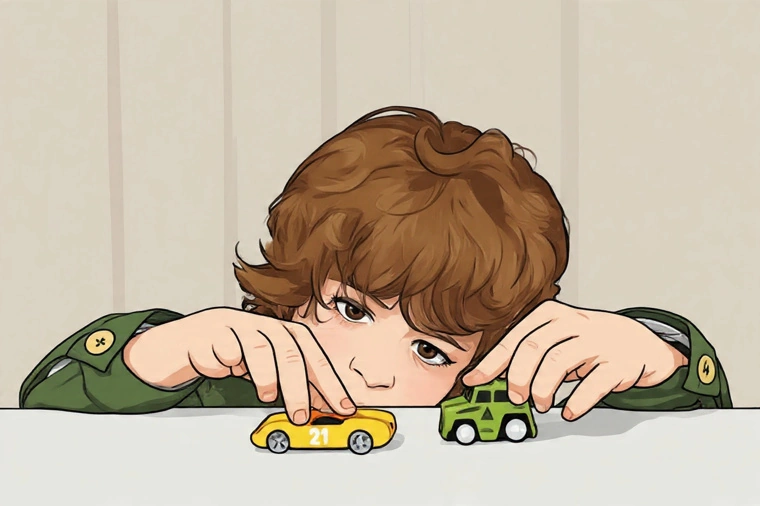
Image: re-cognition.center
What might concern parents:
- Absence of eye contact. The infant rarely looks into eyes, doesn’t “catch” an adult’s gaze, doesn’t smile back.
- Little reaction to being addressed. Even with a loud sound, the child doesn’t always turn around, may not respond to their name.
- Absence of babbling. At 6–9 months of age, most children begin actively cooing and making sounds. With autism, babbling may be sparse or absent altogether.
- Absence of social interaction. The child doesn’t reach toward parents to be held, shows no interest in faces, doesn’t respond with a smile to affectionate communication.
Important: every child develops at their own pace. One isolated sign is not yet a diagnosis. But if you notice several such features at once, it’s better to discuss this with a pediatrician or pediatric neurologist. Early signs of autism may be weakly expressed, but it’s precisely at this age that effective support can be established.
Pediatric Psychiatrist Lydia Ivanko:
“It is very hard to spot very early signs. Parents often don’t attach importance to the absence of eye contact or rare cooing, considering it an ‘individual feature.’ However, it’s precisely in the first months that the foundations of social communication are laid, so it’s important to observe how the child reacts to faces, voices, and hugs. Early alertness shouldn’t frighten, but should serve as a guide for seeking a specialist.”
Behavior of Children with ASD at Ages 1–2 Years
Between the ages of one and two years, behavioral features of children with autism spectrum disorders become more pronounced. This is the period when communication skills, active imitation of adults, first words, and the desire to play with other children typically begin to form. In children with autism, these stages may either not occur or happen differently.
Typical signs of autism in children 1–2 years:
- Absence or sharp decline in speech. The child doesn’t pronounce words, doesn’t repeat after adults, doesn’t use speech for communication.
- Playing “not as intended.” Instead of plot-based games, the child may rearrange objects, spin them, observe rotating details.
- Low interest in communication. The child shows no desire to interact with peers or adults, avoids touch.
- Sensory features. Hypersensitivity may manifest (for example, crying at loud sounds, unwillingness to eat food of certain consistency) or, conversely, absence of reaction to pain, cold.
- Repetitive behavior. Movements in circles, rocking, arm flapping are often observed, which repeat without obvious purpose.
Early signs of autism in children 1–2 years should be perceived not as “oddities,” but as signals for attentive attitude and help. If the baby isn’t developing along a typical trajectory—this isn’t a reason for panic, but it’s definitely a reason for consultation with specialists.
“Not every child who shuns eye contact or ignores their name automatically has autism. However, if difficulties with establishing attachment, repetitive movements, or strong sensitivity to sounds join these features—these are already reasons for evaluation by a specialist. Parents shouldn’t fear the word ‘psychiatrist’: consultation at an early stage can not only confirm normalcy but also help in case of real difficulties. This isn’t stigma, but care for the child’s future.”
What Should Concern Parents at Ages 2–3 Years
By ages 2–3, children typically already actively interact with their surroundings, begin speaking in simple sentences, play role-playing games, and express their desires. It’s precisely at this age that parents most often begin noticing developmental deviations. If a child’s behavior differs greatly from peers—this is a reason to pay attention and consult with a specialist.
Here are signs of autism in children 2–3 years to pay attention to:
- Absence of speech or sharp lag in speech development. The child may not use words or speak in isolated phrases, not striving for communication.
- Ignoring requests and addresses. The baby seems to “not hear,” doesn’t turn at their name, doesn’t react to simple requests, even if hearing is fine.
- Repetitive behavior. Constant rituals are observed, repetitive movements (for example, hand clapping, rocking, spinning objects).
- Unwillingness to play with other children. Absence of interest in joint play, difficulties in establishing contact with peers.
- Difficulties with imagination. Refusal of plot-role-playing games (for example, “feed the doll,” “build a house”), preference for manipulating objects.
- Excessive attachment to routine. The child may become very upset at the slightest change in familiar schedule.
It’s important to understand: if you observe several of these signs, this doesn’t mean a definite diagnosis, but it is a reason to undergo diagnostics with a specialist. Early diagnosis of autism allows starting developmental activities sooner and improving the child’s adaptation.
Don’t Confuse with Individual Features
Every child develops at their own pace. Some babies start talking later, others may be less sociable by nature—and this doesn’t always indicate disorders. Some children need more time to adapt to society, others experience temporary difficulties due to change of environment, illness, or stress.
Observation over time helps distinguish normalcy from signs of disorder. Here’s how individual features differ from signs of ASD:
- With individual features, the child still responds to communication, can establish contact, shows emotions, albeit in their own way.
- With autism, there’s often an absence of desire to enter into interaction, the child seems “in their own world,” avoids gaze, doesn’t try to imitate adults.
If you’re troubled by the development of speech, behavior, or emotional reactions of the child—it’s better to discuss this with a pediatrician, neurologist, or child psychologist. Don’t wait for them to “outgrow it”: early help is the key to successful development and adaptation.
“It’s very important to distinguish manifestations of ASD from temperament features. Some children are naturally reserved, not very active, or slowly ‘warm up’ in new situations. But with ASD, the distinguishing feature will be not just shyness, but qualitative impairments in communication and understanding others’ emotions. Diagnosis always requires a systematic approach: you can’t rely only on isolated observations.”
What to Do If There Are Suspicions
If you have suspicions that your baby’s behavior might be connected to autism spectrum disorder, it’s important not to delay. Early detection of autism in a child allows beginning correctional work in the most sensitive period of brain development. The earlier support begins, the greater the chances for successful adaptation and development.
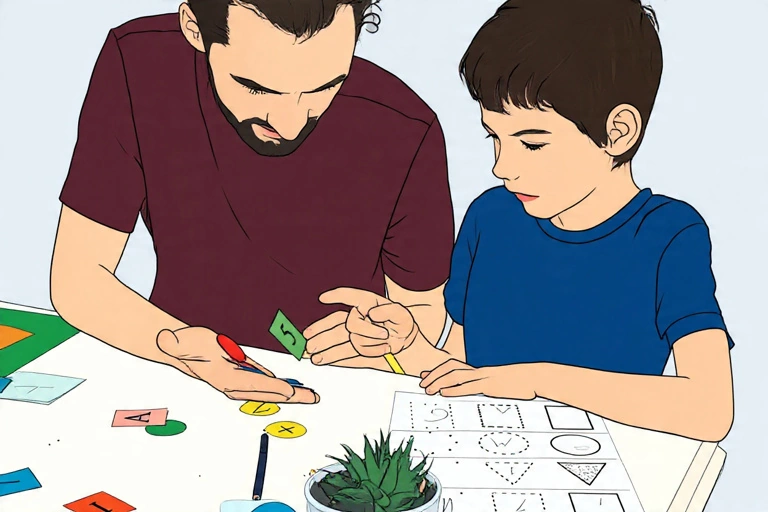
Image: re-cognition.center
Step-by-step algorithm of actions:
- Contact a pediatrician. They will conduct an initial assessment of development and, if necessary, refer to specialized specialists.
- Consultation with a pediatric neurologist and psychologist. These specialists will evaluate behavioral and communicative features of the child using standardized methods.
- Undergo diagnostics at a specialized center. There they conduct specialized tests for early signs of autism in children: ADOS, M-CHAT, CARS, and others.
- Don’t engage in self-diagnosis. Every child is unique, and only a professional can distinguish individual features from ASD symptoms.
Psychological acceptance of the situation is an important stage. Parents should remember: autism spectrum disorders are not a sentence, but a developmental feature that can and should be worked with.
“Parents often struggle to come to terms with a diagnosis and the changes it brings. I always emphasize: autism spectrum disorder is not a sentence, but a challenge. Modern approaches to correction, including behavioral therapy, speech therapy assistance, sensory integration, give real results. The main thing is to start as early as possible, without fear and shame.”
How to Support the Child with Autism and Family
When a diagnosis or suspicions of autism are confirmed, the family’s main task becomes organizing a comfortable and stable environment for the child. Children with ASD especially need predictability, love, and acceptance. In this process, it’s important to support not only the child but also yourself—parents, grandparents, brothers and sisters.
Support recommendations:
- Create a routine. A clear daily schedule helps children with autism feel more confident.
- Use visual prompts. Pictures, cards, and simple diagrams help the child understand what awaits them.
- Play and communicate at their pace. Support the child’s initiative, even if it seems “unusual.”
- Seek professional help. Work with a speech therapist, special education teacher, psychologist, and ABA therapist can significantly improve communicative and social skills.
- Don’t isolate yourself. Communicate with other parents, join support communities. This helps overcome feelings of loneliness and find practical solutions.
It’s important for parents to maintain trust in themselves. You are the best guide into the child’s world, even if the path differs from expectations.
Conclusion
Autism is not a disease, but a special way of perceiving the world. It may require different approaches, greater patience and awareness, but at the same time gives a chance to see unique facets of the child’s personality. If you’ve noticed signs of autism in a child, you shouldn’t wait—it’s better to seek professional consultation and begin support as early as possible.
Today, many methods of helping children with ASD are available, and most importantly—social attitudes themselves have changed. More and more parents, specialists, and schools are learning to understand and accept “special” children. Your love, support, and readiness to learn together with the child—these are the most important resources on this path.
Sources & References
- American Psychiatric Association. (2013). Diagnostic and Statistical Manual of Mental Disorders (DSM-5). Arlington, VA: American Psychiatric Publishing. (Defines ASD and early screening guidelines.)
- Zwaigenbaum, L., et al. (2015). “Early Screening for Autism Spectrum Disorder.” Pediatrics, 136(2), 300-320. (Evidence-based signs in infants and toddlers.)
- National Institute for Health and Care Excellence (NICE). (2021). “Autism spectrum disorder in under 19s: recognition, referral and diagnosis.” (UK guidelines on early detection and parental guidance.)
Discussion 2
There is no system of real help for such children. What’s the use of parents realizing that their child has signs of autism. There is NO effective help from the state. The measures proposed (forced out*) are formal, unsystematic, and absolutely ineffective, since they address only the tip of the iceberg of the problem, and even then — from the side*.
We’ve turned to just about everyone. We pay that kind of money, and there’s no improvement at all. One session costs two fifty, three hundred. Four sessions a week, plus massage and the pool — everything is paid. We’ve forgotten about ourselves, all the money goes to the child. No one helps, they only rip money out of us.
Join the Conversation
Your email address will not be published.